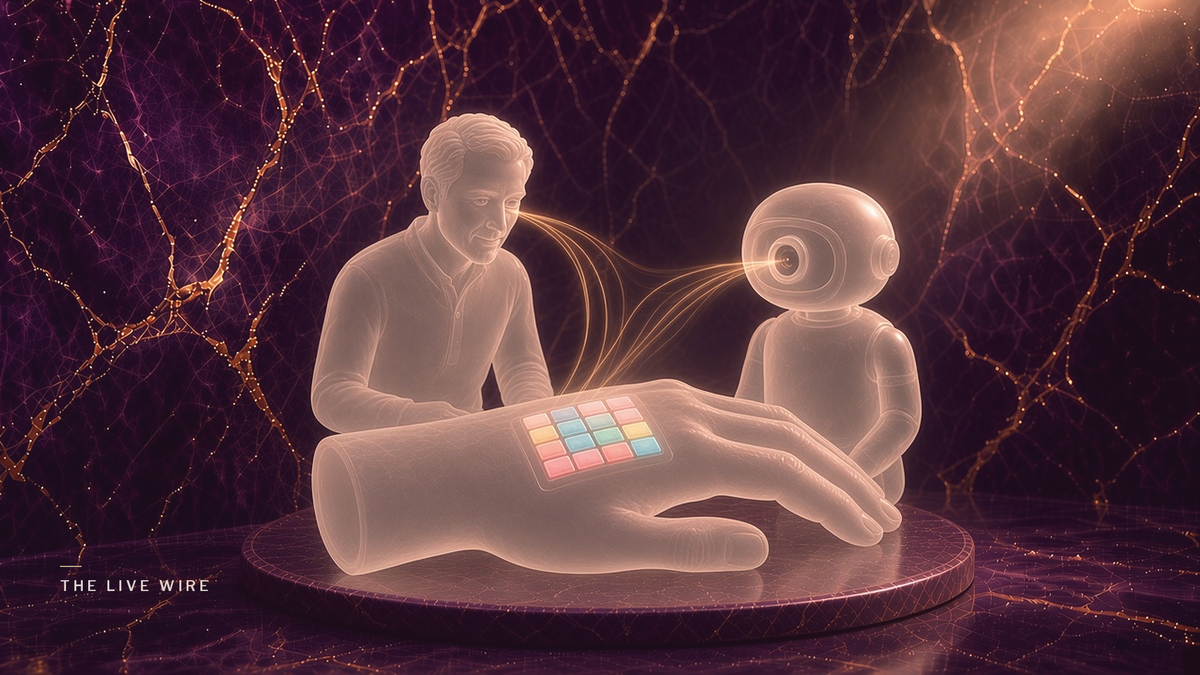
A flexible display gives people and robot cameras different ways to read the same signal
Precious “Preciosa” Myers-Brown · Published
TechnologyRoboticsA KAIST and Yonsei prototype combines visible color with near-infrared patterns on a bendable surface.
Researchers at KAIST and Yonsei University have developed a reflective display that can communicate through two optical channels: color changes visible to people and near-infrared brightness patterns readable by a camera.
KAIST described the work on November 16. The prototype uses 16 individually controlled pixels in a four-by-four grid. A conductive polymer changes its reflective properties under voltage, while a gel electrolyte and flexible base help the display bend. The team demonstrated it on the back of a hand.
Tests also examined camera readability in haze and darkness. The dark-condition test used near-infrared illumination; this does not mean a person could read the display in the dark without light.
The research points toward wearable signals and labels on curved equipment that both people and machines could interpret. It remains a prototype. More pixels, durability testing and integration with robot control are still needed.
Tech Equity
A shared signal could make collaboration easier when a person and a machine need the same information in different forms. The human side deserves equal attention: future designs should make meaning clear without relying on color alone. That is a design question for the next stage, not an accessibility result established by this study.