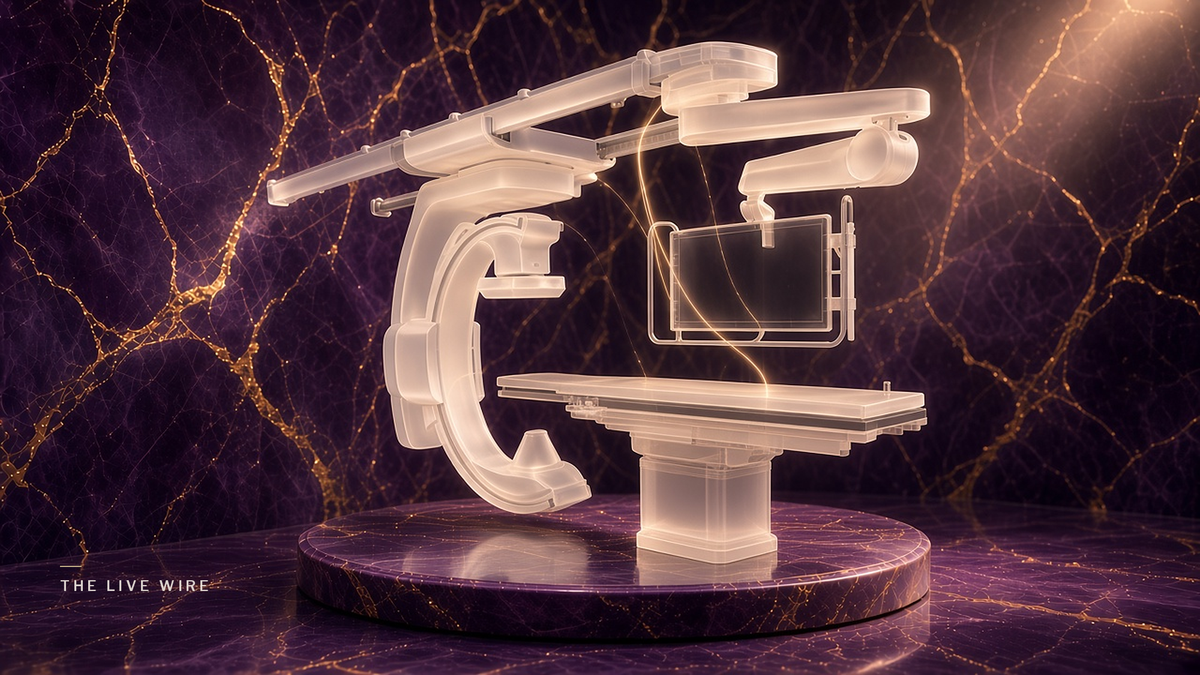
GE HealthCare introduces a ceiling-mounted imaging system designed to give care teams room to work
Precious “Preciosa” Myers-Brown · Published
TechnologyGE HealthCare's new ceiling-mounted imaging system is designed to give procedure teams more room to work. Its announcement is not a U.S. sales launch.
Space around a procedure table matters. Staff need to reach the patient, position equipment and communicate with one another. GE HealthCare's Allia Celeo takes that practical challenge as a starting point for its newest interventional imaging system.
In its November 1 announcement, the company introduced the ceiling-mounted system at TCT 2026 in San Diego. It describes an extra-wide-bore C-arm and integrated cabling intended to give teams flexibility around the table, including when positioning patients with a high body mass index.
The system also includes AI-enabled imaging designed to balance image quality and radiation dose, along with an on-screen digital twin to help clinicians position the equipment. Compatibility with OnWatch Predict adds a service option intended to anticipate equipment problems and support maintenance planning.
These are the manufacturer's design claims, not independent findings that the system shortens procedures, prevents cancellations or improves patient outcomes.
The availability distinction is important. GE HealthCare says Allia Celeo is CE marked, has a U.S. FDA 510(k) submission pending and is not available for sale in the United States. Availability may differ elsewhere. Introducing a device at a conference does not mean a local hospital can purchase it today.
Tech Equity
The opportunity is a procedure room that can adapt to more people and give care teams room to do their work well. Equipment design is one part of that. Staff training, clear communication and planning around a patient's positioning and support needs are part of it too.
For smaller hospitals, the useful questions include installation requirements, maintenance support and total cost. Those details will help determine where a new system can reach patients. A promising design becomes meaningful access when a facility can obtain it, support it and use it for the people who need care.