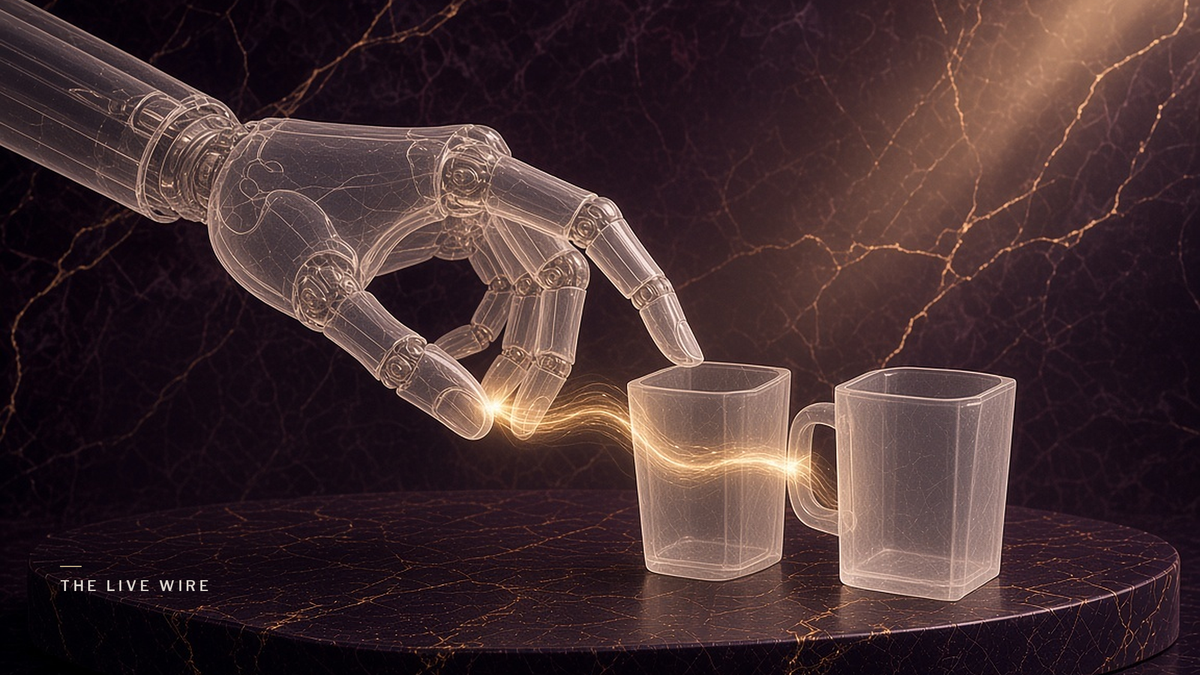
A robot has to find the right handle before it can help
Precious “Preciosa” Myers-Brown · Published
TechnologyGroundingPI gives researchers an open model for locating objects precisely, while the evidence still stops short of a robot working in someone’s home.
XPENG-affiliated researchers and university partners have introduced GroundingPI, a visual-perception research model designed to locate objects and the parts of them a machine needs to act on. Finding “the handle of the cup on the right” takes more than recognizing that there are cups in a picture. The system has to identify the intended cup and locate its handle.
The team has made the paper, code and model weights available, subject to their licenses. The researchers report stronger performance on their perception tests and simulated manipulation tasks, including results using less demonstration data than the comparison systems. Those are the team’s research results, not independent evidence that a home robot is ready to help.
The paper’s Ethics Statement and Research Scope make the limit explicit: driving evaluations used an existing dataset offline, and robot manipulation was evaluated in simulation. No real-world vehicles or robots were deployed in those experiments. XPENG also says the work is exploratory, not an announcement of integration into its commercial products or a commitment to deploy it.
The cup example is small enough to understand and important enough to take seriously. If a person wants help reaching something, the machine has to get the object and the action right. A score on a research test can show progress toward that problem. It cannot tell a person whether a robot will safely help with their breakfast tomorrow.
Making the research available gives other teams something to inspect, test and improve. That is a useful step, provided the story stays honest about the distance between a simulation and somebody’s daily life.
Tech Equity
The people who might use assistive robots should help define what successful assistance means. Is the task one they want help with? Can they give a clear instruction, correct it and stop the action? Does the tool work with the objects and spaces they actually use?
Those questions belong early in development, with people supported and their direct support professionals at the table. Open research creates room for more teams to contribute. The next step is testing that makes the person’s choices and safety as visible as the model’s performance.
Sources: XPENG announcement; GroundingPI project; GroundingPI paper, including Ethics Statement and Research Scope.