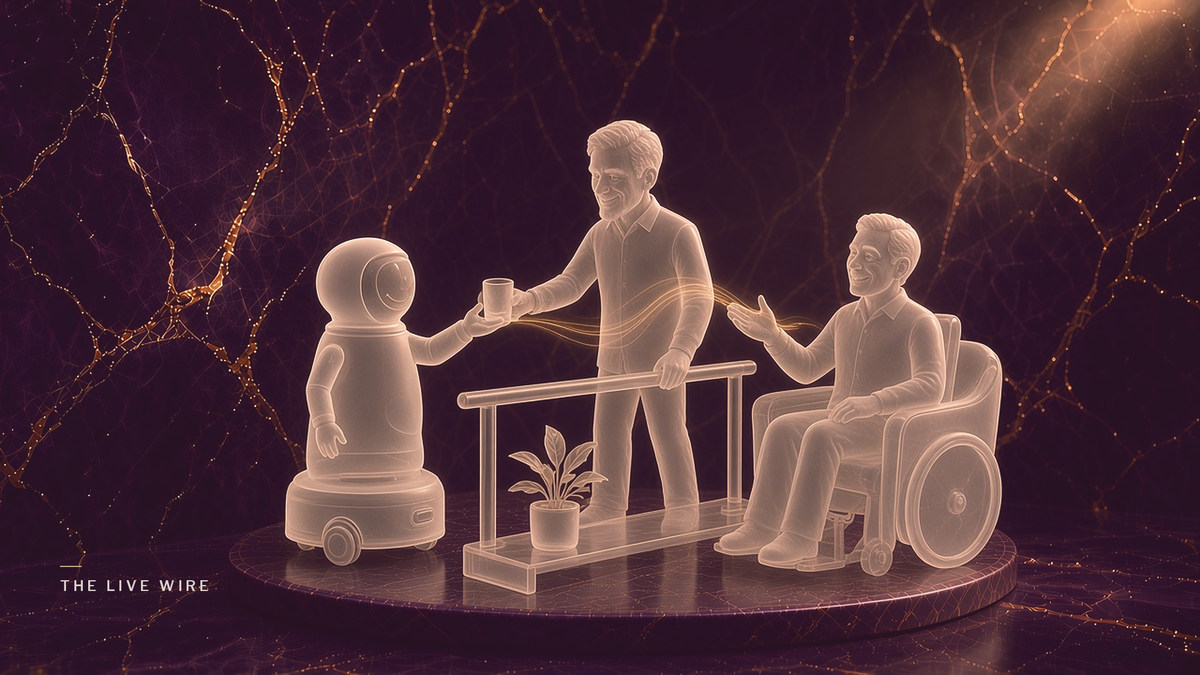
A new research center will study how people and robots learn together over time
Precious “Preciosa” Myers-Brown · Published
RoboticsAgingDisabilityNSF-backed research moves beyond short demonstrations toward everyday interactions that can evolve over months and years.
A new Center for Human-Robot Co-Adaptation brings together 39 researchers at six universities with $30 million in National Science Foundation funding over five years. The University of Texas at Austin leads the collaboration.
In a November 5 report, the University of Utah described its role in studying how people and robots adjust to one another in real settings. Utah plans to use its HERO network, including the Craig H. Neilsen Rehabilitation Hospital and the planned One U Residential Center, where people with complex physical injuries can work toward independent living.
Initial research will focus on robots fetching and delivering items. Later work could explore tidying, conversation, assistive feeding and navigating shared spaces. The goal is to understand interactions that develop over weeks, months or years, rather than judge a robot only by a short laboratory task.
This is a research program, not a consumer robot launch. The announcement does not provide an end-user price or a general deployment date.
Tech Equity
Longer trials create room to ask a more useful question: does the technology fit the life someone wants to lead? A robot that completes a task once is different from one a person chooses to use every day. Control over when it helps, how it responds and when it stops should be part of evaluating that fit.