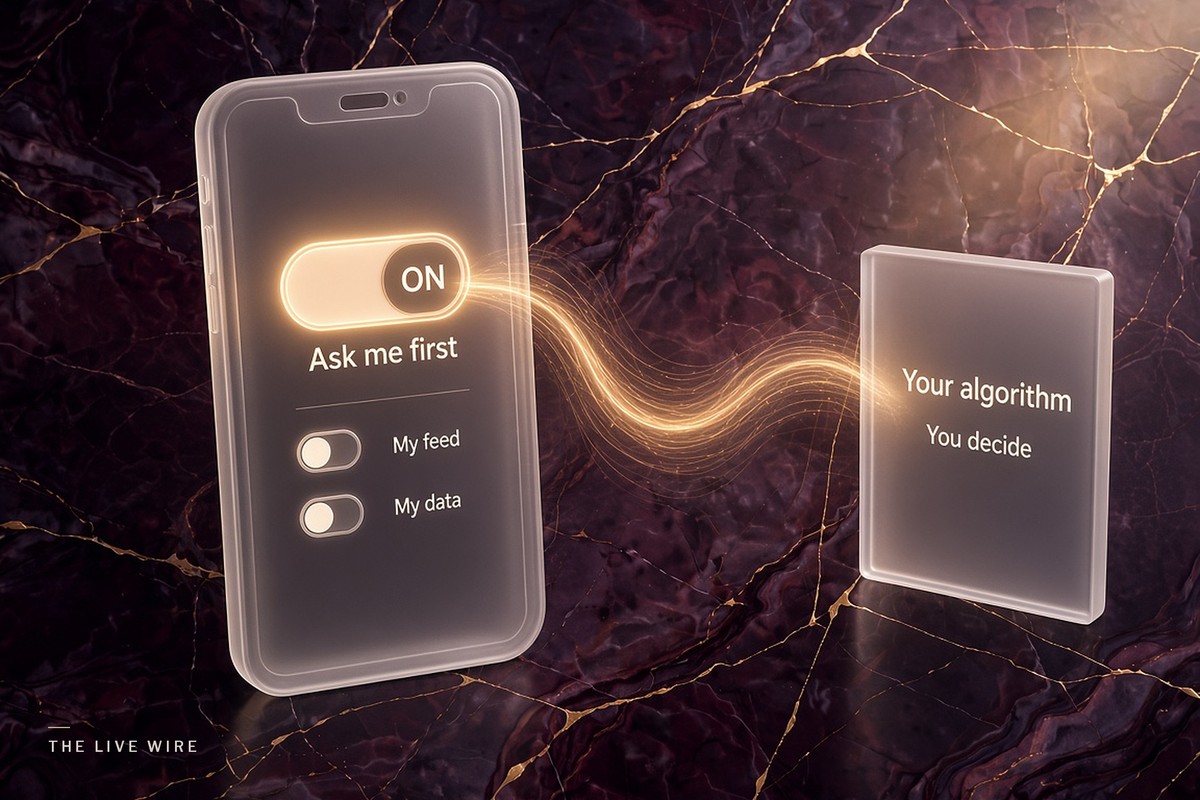
What if young people could own their algorithm? First, someone has to ask them
Precious “Preciosa” Myers-Brown · Published
AIOn November 3, the Consumer Technology Association published a member contribution from Musa Hakim Jr., CEO and co-founder of Lazy Moose Co., titled Oops, We Did It Again: What AI Can Learn From the Internet We Already Built. The association shared it on X with a simple question: what if young people could own their algorithm?
Hakim looks back at the social media era as a lesson. AI is different, he writes, because it “can learn from us, remember us and talk back.” His answer isn’t to remove young people from technology, but to give them more agency inside it: “What does the system know? What has it inferred? Can the user correct it, reset it or tell it what they actually want it to optimize for?”
He also makes room for young people to grow and change their minds: “A preference at 14 should not become a permanent digital identity.” And he closes with this: “For young people especially, the goal should not simply be safer algorithms. It should be helping them own their algorithm.”
Here is where I land. Owning your algorithm starts with being asked. Most systems are built about people, not with them. Give young people real controls, plain-language choices and the right to say no, and safety stops being something done to them.
That matters most for the young people who are least often asked, including young people with intellectual and developmental disabilities. When decisions about a young person are made without them, the chance to correct the record, and to grow past it, should still belong to them.
Tech Equity
Today, the companies that build these systems mostly decide what they learn and what they keep. Hakim’s essay asks for something different: the ability to see, correct and reset what a system has learned. Tech equity means that ability reaches every young person, in plain language, with the freedom to change their mind as they grow.
Sources: Oops, We Did It Again: What AI Can Learn From the Internet We Already Built, Consumer Technology Association, November 3, 2026; Consumer Technology Association on X, November 4, 2026