Generic AI Will Not Save Care. It Might Erase the People Who Need It Most.
The future of care cannot be trained on the average person.
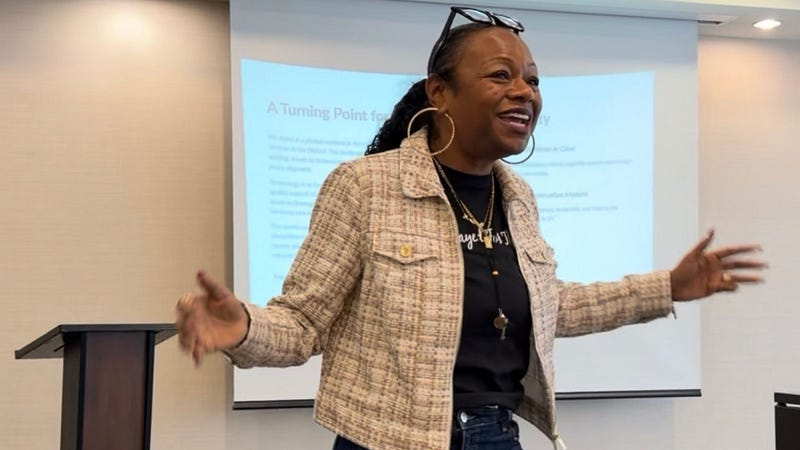
The future of care cannot be trained on the average person.
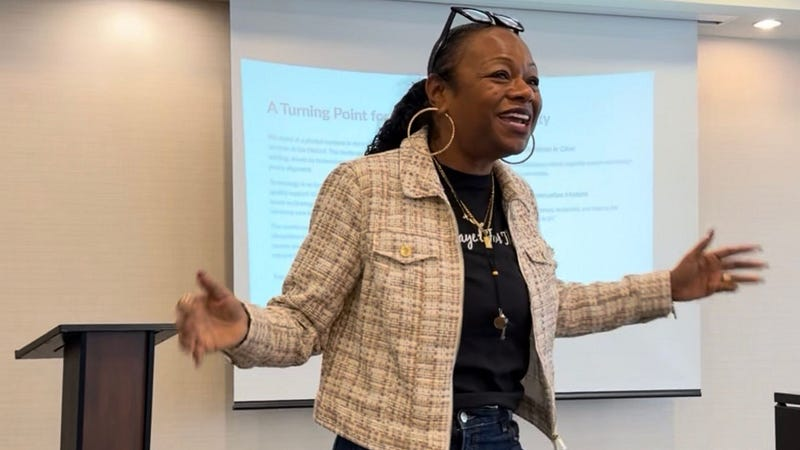
The Tech Equity Mandate
The average person we serve does not exist. Generic AI trained on the general population treats everyone else as an exception, and in care, the exceptions are the people with the most to lose.
For the people I have served for most of my career, the cost of AI without cultural adaptation is not annoyance. It is identity, slowly, over time. People who cannot self-correct in real time get smoothed toward the average until the file no longer matches the human in the room.
Cultural adaptation is the implementer’s job, not the model’s. Providers, agencies, vendors, states, funders, clinicians, and families are accountable for catching what generic AI misses. The technology cannot be the responsible adult in the room. We have to be.
I want to tell you about a friend of mine.
She has a cognitive disability. We have known each other a long time, and like a lot of friendships, ours runs on small habits, regular check-ins, and a vocabulary that means something to the two of us and almost nothing to anybody outside it. And in our vocabulary, there is one phrase that matters more than the rest.
Dean Martin.
If you say “Dean Martin” to most people, you get a singer. Old Hollywood. The Rat Pack. A holiday song playing somewhere in the background of a department store. You might get a reference to “Everybody Loves Somebody” or “That’s Amore” or whatever movie scene is closest in your memory.
If you said “Dean Martin” to a generic AI assistant in her home, you would probably get the same thing. A song. A biography pulled from Wikipedia. A list of films. A casual little response. The system would believe it had helped because it had responded to the words.
But for her, “Dean Martin” never meant any of that.
For her, “Dean Martin” was the name of a moment. Years ago, decades ago, somebody who loved her used Dean Martin’s records to soothe her when life got too heavy to carry. And somewhere along the way, the music stopped being music and the name stopped being a name. “Dean Martin” became the code. It became the way she said, I am not okay. I need someone who knows me to come.
If a generic AI heard her say “Dean Martin,” it would have heard the words and missed the person.
That is the line I want you to sit with for a minute. It is the line that should haunt every conversation we are having about artificial intelligence in care right now.
Hearing the words is not the same as understanding the person.
I call this the Dean Martin Principle™: technology must be programmed to honor personal meaning over universal definitions.
And the next decade of care depends on whether we get this right.
What we are actually building when we say “AI in care”
AI is being introduced into almost every conversation about the future of healthcare, aging services, disability services, smart homes, pharmacy, workforce strategy, clinical documentation, predictive monitoring, caregiver tools, training platforms, and decision-making systems.
I get the excitement. Anything that promises to help us serve people better, anything that might lift the impossible weight off the backs of an exhausted workforce, anything that could finally close some of the gaps in this broken system, is going to get my attention. Mine and everyone else’s.
But I keep noticing that most of the conversation skips a question that matters.
Everybody wants to know what AI can do.
I want to know who AI is learning from.
Because AI does not show up to a person’s life as a neutral tool. It shows up trained. It shows up with values it absorbed from the data it was fed and the people who labeled it. It shows up confident. And in care, the wrong kind of confidence is dangerous. A system can be fast and still be wrong. It can be efficient and still be disrespectful. It can hear a person’s words and still completely miss what those words mean.
That is where the future gets dangerous. Not because technology is bad. I do not believe that. My entire body of work is built around the belief that technology, when designed with humanity at the center, can expand freedom, protect dignity, and help people live fuller lives. I support technology. I have built a career on technology. I am writing this from a position of believing technology is part of how we get out of the workforce crisis, the aging crisis, the disability services crisis we are all sitting in right now.
But technology needs us back. That part keeps getting skipped. Technology cannot be the responsible adult in the room. We have to be. And right now, the speed at which generic AI is being deployed into care is outpacing the speed at which the people deploying it are stopping to ask whether it actually knows the people it is being pointed at.
Generic technology will never be enough for people whose lives require context.
And care is nothing but context.
Why the average person does not exist in this work
Here is one of the quiet truths of this field: the average person we serve does not exist.
The average aging parent does not exist. The average adult with an intellectual or developmental disability does not exist. The average Black family weighing whether to allow monitoring technology into the home does not exist. The average caregiver pulled between work, kids, parents, bills, and fear does not exist. The average person who uses a communication device, who needs help with medication, who lives with sensory differences, who speaks more than one language, who distrusts systems for reasons rooted in real history, who carries a phrase like “Dean Martin” in their daily vocabulary, that person does not exist either.
So when somebody tells me AI is going to transform care, I always ask the same thing back. Transform it for whom?
Because if the system is trained on the general population, the general population becomes the default. Everyone else becomes an exception. And in care, the people treated as exceptions are the people with the most at stake.
This is not a hypothetical concern. It is documented. A widely studied healthcare algorithm was found to be racially biased not because anyone wrote racism into the code, but because the system used healthcare costs as a proxy for healthcare needs. Black patients with the same risk score were sicker than white patients, because the algorithm reflected unequal spending instead of equal need (Science).
That is what happens when the data carries the old system inside it.
The algorithm did not wake up one day and decide to be racist. It followed the logic it was given. It treated cost like need, and because the healthcare system has never spent equally on everyone, the algorithm reproduced inequity at scale. Faster. Cleaner. Harder to argue with.
If AI is trained on systems that already misunderstand Black patients, disabled people, aging adults, poor families, immigrant communities, people who communicate differently, and people whose needs have been under-documented for generations, AI will not magically correct those systems.
It may automate them.
It may speed them up.
It may make them sound more polished.
But polished harm is still harm. And harm at scale, delivered with the confident voice of a well-trained model, is harder to push back against than harm delivered by an obviously broken system. People argue with broken systems. People accept polished ones.
The asymmetry the field is not naming
Now here is the part I need you to sit with, because the field is not saying this part out loud and we cannot have an honest conversation about AI in care until somebody does. So I will say it.
When you and I have a frustrating experience with technology, we push back.
The chatbot misunderstands us, we type it again. The voice assistant gives us the wrong song, we tell it no. The AI summary gets our tone wrong, we rewrite the email. The model assumes something about us that is not true, we correct it. We carry our own story with us into every interaction. We have full control of our communication. We can defend ourselves in real time.
Most of the people I have served in my career cannot do that. Not in the same way. Not with the same speed. Not with the same authority in their own voice that you and I take for granted.
People with certain cognitive disabilities cannot always self-correct against a system that has decided who they are. Seniors who are losing memory cannot always reach for the right word fast enough to overrule the device. Adults who use communication devices, adults who speak in a language the model was barely trained on, adults whose preferences live in their bodies more than in their words, all of them are walking into rooms where the AI gets to speak with confidence and they have to fight to be heard over it.
That is the asymmetry. And the cost of it is not annoyance. The cost of it is identity, slowly, over time.
Here is how it actually plays out. A person with an intellectual disability has lived in a home for years. The staff turn over. New DSPs come in. The provider changes. The waiver auditor changes. The clinician retires. The case manager moves on. And the person stays. They are still themselves. They still have the same likes, the same dreams, the same wishes, the same outcomes they have been working toward, the same culturally adapted needs that are part of who they are.
But every staff change, every provider change, every system handoff, depends on someone carrying that person’s story forward accurately. Their food preferences. Their family references. Their language. Their faith. Their music. The phrase that means “I am not okay.” The thing that calms them. The thing that scares them. The thing that makes them light up.
Now drop generic AI into that handoff. Drop it into the documentation. Drop it into the assessment. Drop it into the care plan. Drop it into the daily reminders. Drop it into the predictive risk score. Drop it into the chatbot the agency is going to use to triage messages from the family.
If the AI was not built with that person’s culture, language, history, and meaning in the training data, every handoff smooths them a little more toward the average. The version of them on file starts drifting toward the version the model finds easier to handle. Their preferences get flattened. Their cultural references get translated into something the system understands instead of something they recognize. Their “no” gets logged as noncompliance. Their silence gets logged as stable. Their distress gets misread because the model never learned what their distress sounds like.
And nobody notices, because the person who could most clearly say “that is not me” is the same person whose voice the system was already struggling to hear.
That is the erasure I am talking about. Not loud. Not dramatic. Not one bad incident you could point at and fix. Just the slow replacement of a real person with a model’s best guess at a person, until the file no longer matches the human in the room.
This is what generic AI without cultural adaptation actually does to the people I have spent my career serving. It does not save them. It quietly rewrites them.
And the math gets worse, because there is a second asymmetry working at the same time.
The other end of the failure: people who will not question AI
Here is the part where I lose patience with the conversation, because the field talks about AI like the only question is whether the model is good enough. As if the only failure mode is the technology itself.
The other failure mode is human, and we know it, and we keep pretending we don’t.
There are people who will never question AI.
I am not saying that to be cynical. I am saying it because we are watching it happen in real time. A lawyer files a brief and the judge finds out the case citations were hallucinated, because nobody on that side checked. A social media manager pastes an AI response into a post and forgets to delete the part where the model is talking to itself. A student turns in a paper that confidently explains a fact that has never been true. A professional sends a client email written in a tone that is not theirs because the model picked it for them and they were tired.
Now imagine that pattern, that exact pattern of “the output sounded confident so I just sent it,” landing in care.
Imagine the doctor running a packed intake who takes the AI summary at face value. Imagine the nurse charting at the end of a sixteen-hour shift who lets the AI suggestion stand because she does not have the bandwidth to second-guess it. Imagine the DSP working a double whose phone alerts that the AI says the person is fine, and the DSP keeps moving because that is what you do when there are not enough of you on the floor. Imagine the case manager who drops a generic intake summary into the plan because the system pre-filled it and the meeting is in twenty minutes. Imagine the family member who asks the smart speaker about their parent’s medication and gets a confident answer they have no way to verify.
None of these people are bad. Most of them are exhausted. Some of them are over their head. Many of them have been told for years that “AI will help” and they are taking that promise at its word because they do not have time to do the verification work the technology was supposed to remove.
And on the other end of all of those interactions is a person who cannot push back against the AI either.
That is the chain. The person who cannot self-advocate against the model on one end. The implementer who does not have the time, the training, or the authority to question the model on the other end. And the model in the middle, sounding confident, generating outputs that look like care.
This is the thing technology cannot solve by itself. This is where humans have to hold the line. And right now, the field is not holding it.
Where the responsibility actually lives
I want to be clear about something, because I am going to keep saying it until people stop dodging it.
The responsibility for cultural adaptation is not on the AI to be perfect.
The responsibility is not on the person served to advocate harder against a system the system already has the volume turned up on.
The responsibility is on the implementer. On the provider. On the agency. On the state that approves the technology in the waiver. On the funder. On the clinician. On the technology vendor that sells the tool. On the person at the planning table who is supposed to know who this person is before the device gets installed and the model starts talking.
Cultural adaptation has to happen at the planning level. In the assessment. In the person-centered plan. In the data the AI is trained or fine-tuned on. In the prompts the implementer writes. In the review process before any AI-generated content reaches the person or their record. In the training of the workforce that is going to live with this technology day in and day out.
It cannot be added on at the end. It cannot be a checkbox. It cannot be the thing the marketing team puts in the deck and the operations team forgets to fund. It is the work or it is not done.
This is why my work matters, and I am going to say that without apologizing for it. My company exists because someone has to make sure those voices are protected even as technology fills the gaps the workforce cannot fill anymore. That is what Vista Supports does. That is what the WATI Institute teaches. That is what Tech Equity is about. We are not anti-AI. We are pro-person. And right now, in this moment, those two positions require somebody in the field to be loud about a thing nobody wants to hear.
The line between care and erasure runs straight through cultural adaptation. If you skip it, the technology stops being support and becomes the thing that smooths the person out of their own story.
The cameras nobody asked the family about
Let me give you one more example, because the abstract version of this argument is too easy to nod at and walk past.
I have been in rooms where teams told me they could not understand why a Black family refused in-home cameras. The team had done the assessment. They had the technology ready to deploy. They were confident this was the right answer. The family said no.
The team kept pushing. But it’s for safety. But it’s the best option. But other families use this.
What the team had not stopped to ask was what cameras meant in this family’s history. For this family, being watched was not neutral. It was tied to profiling. To criminalization. To systems that had never protected them. To the team, a camera meant protection. To the family, it meant threat. Same device. Different meaning. Built from different memory.
You can call that resistance if you want. I call it accurate.
Now imagine the AI assistant that came installed with that camera system. Imagine the language it used. The tone. The defaults. The assumptions baked into its responses. The model on the other end of that camera was trained on data that almost certainly did not include this family’s history with surveillance, this family’s cultural context, this family’s reasons for saying no. So even when the family agreed to a different solution, the technology was still going to misread them, in small ways and big ways, every time it spoke to them, because nothing in its training taught it otherwise.
If the technology does not know the difference between a household where surveillance equals safety and a household where surveillance equals harm, the technology has no business being there. And if the implementer cannot see that difference either, then there is no human in the loop. There is just the model, talking confidently to a family that has every reason not to trust it, supported by a team that does not know enough to translate.
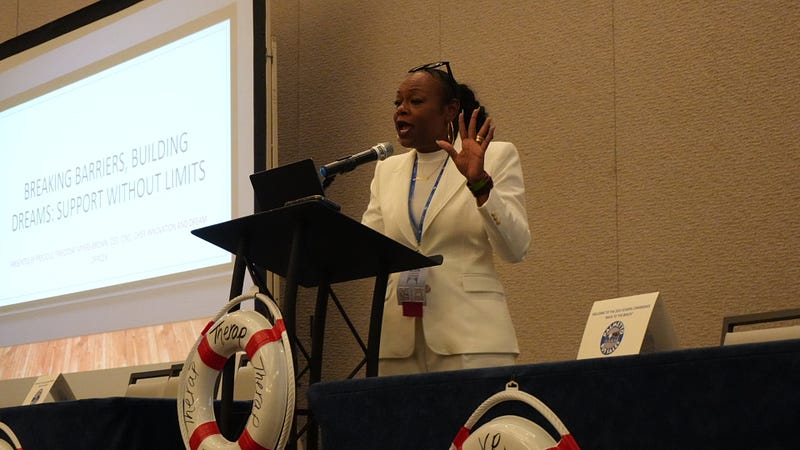
The future is already being built. The question is whether it knows us.
AI is not coming. It is here. It is being built into documentation systems, health monitoring, smart homes, scheduling, medication support, triage tools, caregiver platforms, training systems, and decision-making frameworks across every part of health and human services. The infrastructure is being installed underneath us while we are still debating whether we want it.
The question is not whether care will become more digital. It will.
The question is whether the digital care environment will understand the people inside it.
Will it understand a grandmother who does not want a camera in her home, not because she has anything to hide, but because being watched has never meant safety to her?
Will it understand an aging parent who wants support but does not want to feel managed?
Will it understand an adult with a developmental disability whose distress shows up as a phrase that sounds, to anyone outside her life, like a request for music?
Will it understand a bilingual family where the emotional truth lives in one language and the medical paperwork lives in another?
Will it understand that silence in one home is pain, in another is dignity, and in a third is somebody refusing to perform for a system that has already made up its mind about them?
Will it understand joy?
Will it understand privacy?
Will it understand culture?
Will it understand freedom?
If not, then we are not building the future of care. We are digitizing the same old gaps with better marketing.
What Tech Equity actually means
When I talk about Tech Equity, I am not just talking about who has access to devices. That is part of it, but it is not the whole conversation. Tech Equity is about whether technology expands a person’s life or shrinks it.
It is about whether systems can protect somebody without surveilling them. It is about whether a person can be safe without being controlled. It is about whether health data becomes more accurate for the people the system has historically guessed about. It is about whether families can have peace of mind without stripping somebody else of their privacy. It is about whether the future of AI, healthcare, aging services, and disability supports finally includes the people who have usually been left out of the design room.
When I say Tech Equity, I am talking about access to care. Access to safety. Access to home. Access to communication. Access to health insight. Access to cultural dignity. Access to freedom.
That is why this conversation is urgent right now. The systems we build today are going to become the systems that care for us tomorrow. And I do not want my future, my family’s future, my community’s future, or the future of the people I have served for most of my career, decided by technology that does not know us.
Cultural decoders, not faster guessers
The next generation of care technology cannot just answer questions. It has to understand meaning.
It has to know that “Dean Martin” may not be a music request. It has to know that a person’s refusal may not be noncompliance. It has to know that privacy is not a behavior issue. It has to know that a family’s hesitation is not ignorance. It has to know that culture is not a barrier to implementation. Culture is the path to implementation.
It has to know that technology in care is never just a device. It is a relationship. It is an environment. It is a support structure. It is a promise.
The future does not need more technology that talks at people. It needs technology that learns people. Not in a surveillance way. Not in a “let me collect every piece of your life and sell it back to you” way. In a dignity-centered, person-specific, culturally responsive way that says: your words, your routines, your family, your body, your memory, your culture, your home, and your freedom matter here.
That is the line between generic AI and Tech Equity. And the people who hold that line are the implementers. The providers. The clinicians. The agencies. The vendors. The funders. The states. The trainers. The families who refuse to let their loved one be smoothed out by a model. Us.
The question every leader should be asking
The field does not need AI sprinkled on top of outdated systems. It needs new thinking. It needs leaders who understand that technology cannot fix a system that refuses to evolve. It needs vendors who build with communities, not just for markets. It needs providers who stop treating technology as a threat and start treating it as a bridge they are responsible for crossing safely. It needs policymakers who understand that access to technology is becoming access to care. It needs families who know they can ask for more than survival. It needs workforce training that teaches people to use technology without losing their humanity. And it needs people with disabilities and aging adults at the center of every design conversation, not as a focus group at the end.
AI is not the authority. The person is the authority. The culture is the authority. The lived experience is the authority. The data matters, but the data has to be interpreted through humanity, or the data will lie. And then the people most likely to be lied about are the people least equipped to fight the lie.
The question is not, “How do we add AI to care?”
That question is too small.
The better question is this: How do we make sure AI understands the people care systems have historically misunderstood, and how do we make sure the humans deploying it are accountable for catching what it misses?
That is the question every provider, policymaker, funder, technology vendor, healthcare leader, and family should be asking right now. Because if we get this wrong, AI will not just miss opportunities. It will miss people. And when technology misses people in care, freedom can be interrupted. Health can be misread. Safety can become surveillance. Support can become control. Identity can be erased, slowly, file after file, until the person on paper is no longer the person in the room.
If you are a provider, a vendor, a state, a funder, a clinician, or a family member, you are an implementer now. You did not necessarily sign up for that. The technology is going in either way. Your waiver is going to mention it. Your agency is going to be asked to deploy it. Your loved one is going to be talking to it. The question is not whether you are involved. The question is whether you will let the technology be deployed without you, or whether you will hold the line on what cultural adaptation, person-centered planning, and human review actually look like inside the system you are responsible for. There is no neutral position in this anymore.
I am not willing to let that happen quietly.
That is why I am saying this clearly: Generic AI will not save care.
Technology that understands people, deployed by humans who hold the line, might.
Precious “Preciosa” Myers-Brown is The Voice of Enabling Technology™ and author of Tech Equity: Freedom Through Enabling Technology. She writes about the future of care, where technology must understand the person, the culture, and the meaning behind the data, and where the humans deploying it must be accountable for protecting both.
For speaking, consulting, or conversations about culturally adapted AI, Tech Equity, and enabling technology, start at links.pmbofficial.com.
I write more about this in Tech Equity: Freedom Through Enabling Technology.
Continue reading: AI Flattened My Voice. Now Imagine What It Does to People It Was Never Trained to Hear.